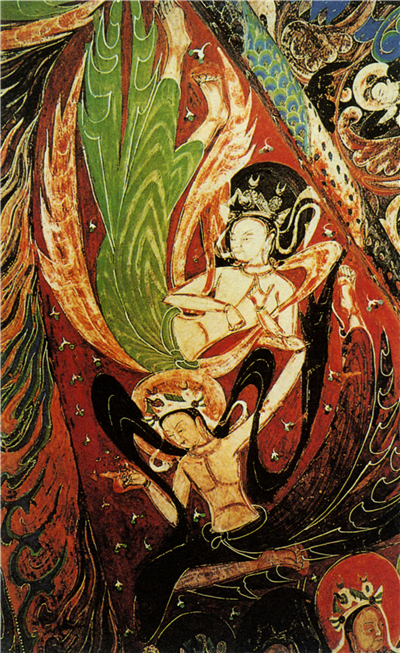
Flying Apsaras
Overview
Flying Apsaras, also known as Feitian in Chinese, are celestial beings depicted in Buddhist art, particularly in the murals of the Mogao Caves in Dunhuang, Gansu Province, China. These ethereal figures are often portrayed as graceful dancers or musicians, adorned in flowing garments and ribbons, symbolizing beauty, freedom, and transcendence. Over centuries, the Flying Apsaras have inspired various forms of art, dance, music, and cultural performances, becoming an iconic representation of Chinese cultural heritage and the ancient Silk Road.
Historical and Cultural Significance
The Flying Apsaras are rooted in Buddhist mythology, where they are considered celestial beings who serve as messengers or attendants of the gods. Their imagery is prominently featured in the Mogao Caves, a UNESCO World Heritage Site, which houses one of the world's most extensive collections of Buddhist art. Dating back over 1,000 years, the murals in these caves depict Flying Apsaras in dynamic poses, often engaged in dance or playing musical instruments, embodying the spiritual and artistic ideals of the time.
The Mogao Caves, also known as the Thousand Buddha Grottoes, were a crucial hub on the ancient Silk Road, where cultures from East and West converged. The Flying Apsaras, as depicted in the murals, reflect this cultural exchange, blending Indian, Central Asian, and Chinese artistic influences. Their flowing ribbons and diaphanous attire symbolize the interconnectedness of cultures and the pursuit of spiritual enlightenment.
Influence on Dance and Performing Arts
The elegance and fluidity of the Flying Apsaras have profoundly influenced Chinese classical dance. In the 1970s, the Gansu Provincial Song and Dance Ensemble created the dance drama Flower Rains Along the Silk Road, which captivated audiences with its interpretation of the Flying Apsaras' movements. This marked the emergence of Dunhuang dance as a distinct genre within Chinese classical dance, characterized by its intricate hand gestures, flowing movements, and poses inspired by the murals.
Dance experts like Gao Jinrong and Shi Min have extensively studied the murals and sculptures to develop a systematic approach to teaching and performing Dunhuang dance. Educational institutions, such as the Dunhuang College at Northwest Normal University, have established dedicated programs to train a new generation of dancers in this unique art form. Students learn not only the physical techniques but also the cultural and historical context of the Mogao Caves, ensuring the preservation and evolution of Dunhuang dance.
Modern Interpretations and Productions
The Flying Apsaras continue to inspire contemporary art and performances. The Gansu Provincial Song and Dance Theater's production of "Flying Apsaras", set in the Tang Dynasty (618-907), highlights the cultural and historical significance of the ancient Silk Road and Dunhuang frescoes. The musical, produced by Li Dun and featuring songs by San Bao, incorporates diverse music styles and showcases the vocal talents of performers from the Oriental Performing Arts Group. The production integrates iconic images from the Dunhuang murals, including Flying Apsaras and the nine-colored deer, creating a visually and thematically rich experience.
Similarly, the National Ballet of China's production "The Light of Heart" pays homage to the artists and protectors of the Mogao Caves. The ballet combines traditional Chinese aesthetics with Western classical ballet, featuring dances inspired by the Flying Apsaras and other figures from the murals. The story revolves around the love and dedication of individuals committed to preserving the cultural treasures of Dunhuang.
Educational and Technological Initiatives
Efforts to preserve and promote the legacy of the Flying Apsaras extend beyond traditional art forms. The Dunhuang Research Academy has been instrumental in digitizing the Mogao Caves, creating high-fidelity replicas of the murals and sculptures for exhibitions worldwide. These digital reproductions allow a broader audience to experience the beauty of Dunhuang's art without compromising the preservation of the original site.
In addition, modern technology has been used to bring the Flying Apsaras to life in innovative ways. For example, the Beijing 2022 Winter Olympics featured performances and designs inspired by the Flying Apsaras, including the official torch and the Big Air Shougang venue. Digital animations, augmented reality (AR) technology, and multimedia installations have also been employed to create immersive experiences that highlight the cultural and artistic significance of the Flying Apsaras.
Commercial and Popular Culture
The Flying Apsaras have also found their way into contemporary commercial and popular culture. Collaborations with brands like Starbucks and Hersee Beauty have resulted in products inspired by Dunhuang's art, such as mugs, tote bags, and cosmetics. These initiatives aim to bridge the gap between traditional cultural heritage and modern consumer lifestyles, making the beauty of the Flying Apsaras accessible to a wider audience.
The Flying Apsaras are more than just artistic representations; they are a testament to the rich cultural and spiritual heritage of China. From their origins in Buddhist mythology to their enduring influence on dance, art, and popular culture, the Flying Apsaras continue to inspire and captivate people worldwide. Through educational programs, technological innovations, and creative productions, their legacy is preserved and celebrated, ensuring that future generations can appreciate the timeless beauty and significance of these celestial beings. Article reference1. Flying Apsaras takes flight in Beijing, set for nationwide tour. chinadaily.com.cn. 20242. From caves to the stage. chinadaily.com.cn. 2017Photo Gallery(4 pictures)CategoriesArtsTagMythologyChinese DanceRelatedFeitian DanceChina TV Drama Flying Apsaras AwardsMogao CavesSan BaoCatalogue1. Overview2. Historical and Cultural Significance3. Influence on Dance and Performing Arts4. Modern Interpretations and Productions5. Educational and Technological Initiatives6. Commercial and Popular Culture- - - []








